The Complete Guide to AI-Powered Construction Scheduling
Construction scheduling has been dominated by the Critical Path Method for more than sixty years. CPM was a genuine breakthrough when it was developed — a systematic, mathematical way to model project dependencies and identify the sequence of activities that determines overall project duration. For the era it was born into, it was revolutionary. But the construction industry has changed dramatically since the late 1950s, and CPM alone is no longer sufficient to manage the complexity and volatility of modern projects.
Today's construction projects involve hundreds or thousands of interacting work packages, dozens of subcontractors, supply chains that span continents, and a regulatory environment that can change with little warning. Weather, labor markets, and material availability introduce uncertainty at every level. The idea that a single deterministic schedule — updated weekly by a project controls engineer — can adequately represent this complexity has always been a polite fiction. AI construction scheduling replaces that fiction with probabilistic foresight grounded in real data. This guide explains how it works, why it matters, and what it means for the project teams who adopt it.
The Limitations of Traditional CPM Scheduling
To understand why AI adds value, you first need to understand exactly where CPM falls short. The most fundamental problem is that CPM is a deterministic model applied to a stochastic problem. Each activity has a single duration estimate, a single dependency structure, and a single resource assignment. In reality, every one of these parameters is uncertain — but CPM treats them as if they are fixed.
The second major limitation is update frequency. Most project teams update their schedule weekly at best, and many do so less frequently. In a fast-moving project with dozens of active work fronts, a week-old schedule is stale data. By the time a delay is visible in the CPM network, it has often been propagating for days or weeks in the field. Reactive scheduling means chasing problems that are already entrenched rather than catching them while they are still manageable.
Third, CPM does not learn from experience. Every project starts with a fresh schedule, and the lessons embedded in the history of similar past projects are largely inaccessible to the scheduler building the new CPM network. A planner at a large general contractor might have personal knowledge of how long certain activity types typically take — but this knowledge is informal, subjective, and non-transferable. AI construction scheduling makes that institutional knowledge systematic, quantitative, and scalable.
How AI Transforms Schedule Development
AI-powered scheduling begins with a fundamentally different model of project duration. Rather than assigning single-point estimates to activity durations, machine learning models train on historical project data — actual start and finish dates, productivity logs, weather records, supply chain events, and labor availability data — to generate probabilistic duration distributions for each activity type. Instead of saying "structural steel erection for Floor 6 will take 14 days," the AI model says "structural steel erection for Floor 6 has a 50% probability of completing within 14 days, a 80% probability of completing within 18 days, and a 95% probability of completing within 23 days."
This distributional approach enables Monte Carlo simulation of the entire project schedule. By running thousands of simulated project executions — each drawing randomly from the probability distributions for individual activity durations — the AI generates a probabilistic picture of project completion that reflects true uncertainty. Project teams can see not just when the model predicts completion, but the full range of likely outcomes and the key risk drivers that determine where on that range the project is likely to land.
AI also assists in schedule development by identifying logical gaps and common sequencing errors. Pattern recognition across historical projects can flag situations where a proposed activity sequence has historically led to delays — for example, cases where a specific combination of subcontractor trade overlaps has consistently created productivity conflicts. This kind of institutional knowledge, embedded in the AI model, is something that even experienced schedulers often lack.
Real-Time Schedule Monitoring and Automated Alerts
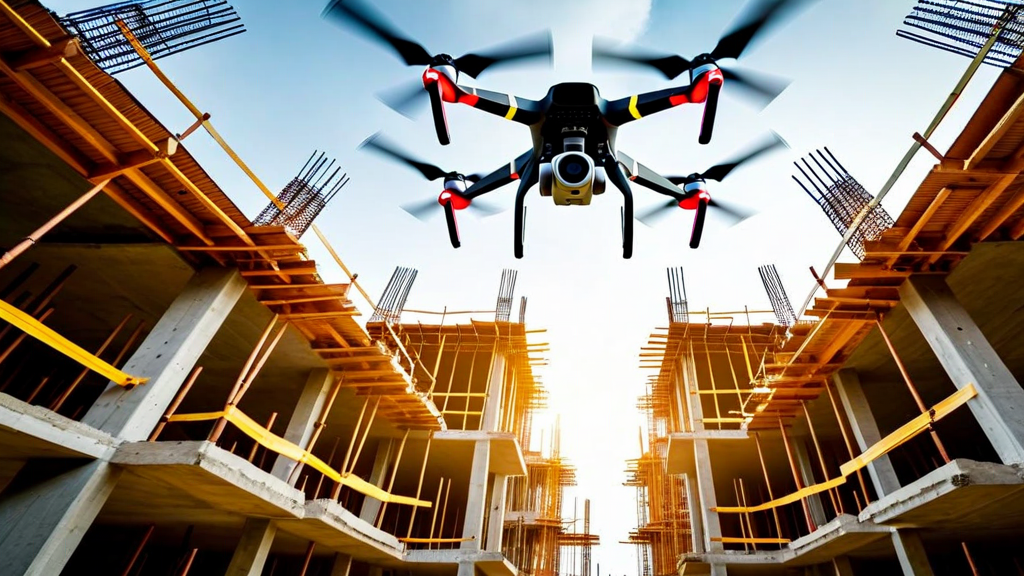
Once a project is underway, AI scheduling systems continuously ingest progress data from multiple sources — daily reports, foreman logs, IoT sensors, drone surveys, and integration feeds from subcontractor systems — and update the project model in near real-time. This continuous recalibration is one of the most significant advantages of AI over traditional CPM-only approaches.
When actual progress deviates from the planned baseline, the AI model does not simply flag a variance. It runs forward simulations to assess the downstream impact of the deviation on subsequent activities and on overall project completion. A three-day delay in one trade's scope does not always translate to a three-day project delay — but sometimes it triggers a cascade of downstream impacts that compound to a three-week schedule slip. AI can model these cascade effects in seconds, giving project teams the information they need to decide whether and how to respond.
Automated alert systems can notify the right people — project managers, superintendents, trade contractors, owners — when the AI model detects a developing risk. These alerts can be tiered by severity and routed based on role: a minor productivity dip might generate a note to the superintendent, while a developing critical path impact might trigger an executive notification. The result is a project management culture that is proactive rather than reactive, addressing problems when they are still small and manageable.
Resource Optimization and Workforce Planning
Construction project schedules are inseparable from resource plans. The duration of any activity depends on how many workers are assigned to it, what equipment is available, and whether the required materials are on site when needed. AI scheduling systems that integrate resource data can optimize workforce deployment in ways that are simply impossible with manual methods.
Labor leveling — the process of smoothing workforce demand to avoid sharp peaks and valleys — is notoriously difficult to do well with CPM software. Most schedulers do a reasonable job of leveling within their own scope, but the interaction effects between multiple trade contractors working in the same spaces create conflicts that are invisible to any single participant. AI models that aggregate data from all parties can identify these conflicts before they materialize and generate resequencing options that reduce crew interference.
Material procurement planning is another area where AI scheduling delivers significant value. By projecting the forward schedule with probabilistic confidence intervals, AI tools can generate material demand curves that account for schedule uncertainty. Rather than placing procurement orders based on a single-point schedule that may or may not be accurate, project teams can plan material delivery windows with appropriate buffers for the actual range of likely construction sequences.
Integration with BIM and Digital Twins
The most powerful application of AI scheduling is in the context of a fully integrated digital project model — one where the schedule, the BIM geometry, the cost data, and the site conditions are all connected in a single data environment. This integration enables what the industry calls 4D simulation: the ability to visualize the planned and actual construction sequence in three-dimensional space, overlaid on the physical model of the building or infrastructure asset being constructed.
4D BIM combined with AI scheduling creates a genuine digital twin of the construction process. Project teams can simulate proposed schedule changes to see how they affect space utilization on site, trade sequencing, and logistics flows. They can compare the as-built 3D model (generated from drone or LiDAR scans) to the as-planned BIM model to automatically detect and quantify physical progress. These capabilities reduce the time and cost of schedule updating while simultaneously improving the accuracy of progress measurement.
Key Takeaways
- CPM scheduling is deterministic and cannot adequately model the probabilistic nature of construction project uncertainty.
- AI scheduling uses machine learning to generate probabilistic duration distributions, enabling Monte Carlo simulation of entire project schedules.
- Continuous real-time data ingestion and automated alert systems allow project teams to detect and respond to developing schedule risks days or weeks earlier than traditional methods.
- AI resource optimization can level labor demand, reduce crew interference, and improve material procurement planning.
- Integration with BIM enables 4D simulation and digital twin capabilities that dramatically improve schedule accuracy and project visibility.
Conclusion
AI construction scheduling is not a replacement for experienced project controls professionals. It is a force multiplier that gives those professionals better data, faster insights, and more powerful analytical tools. The schedulers, project managers, and superintendents who learn to work with AI-powered scheduling systems will be dramatically more effective than those who rely on CPM alone. For the construction industry as a whole, the widespread adoption of AI scheduling is one of the most promising paths to the productivity improvements and cost certainty that owners, contractors, and communities have long been waiting for.